



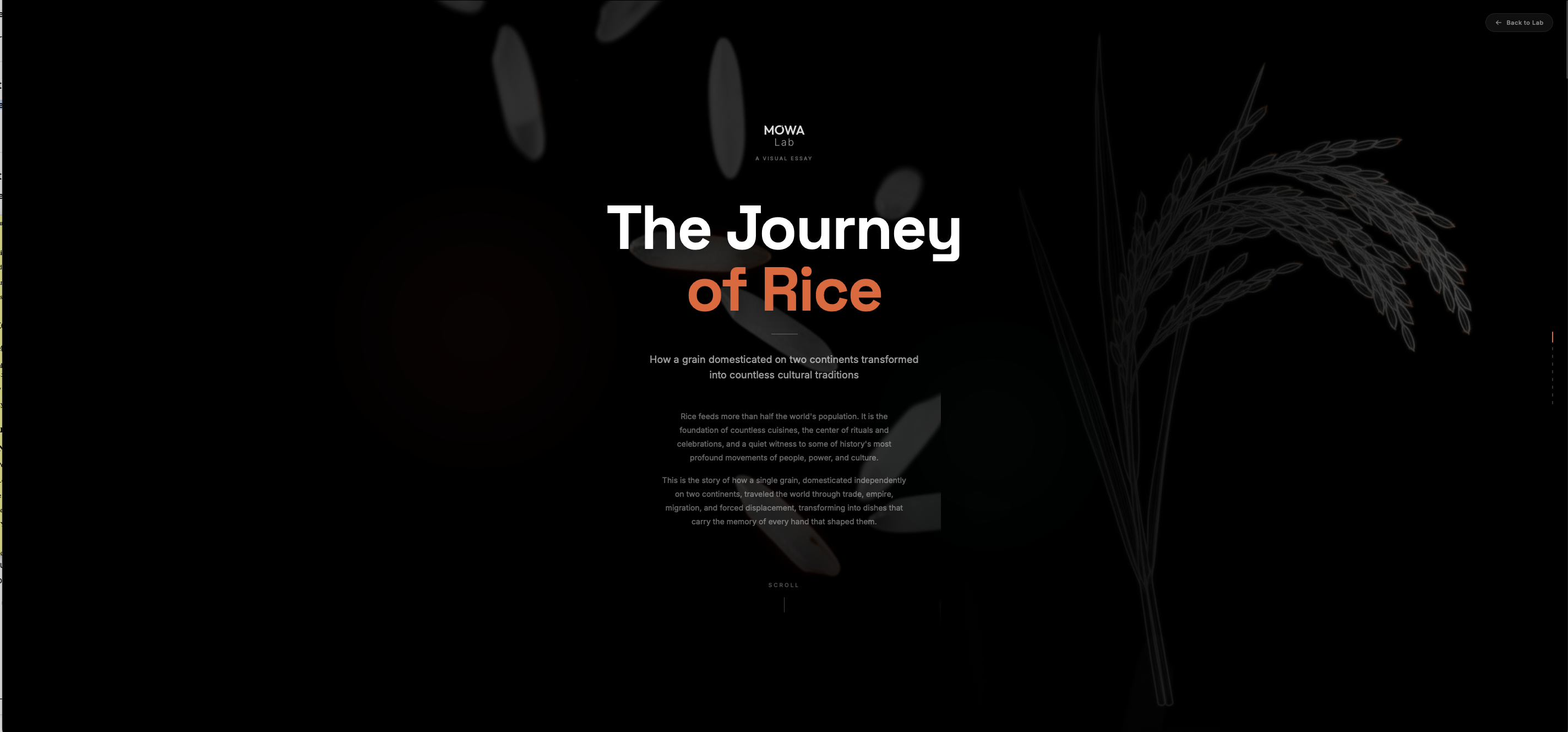
The Journey of Rice
How a grain domesticated on two continents transformed into countless cultural traditions. An interactive scrollytelling essay exploring the global journey of rice through data visualisation and narrative design.


of Rice
Type
Interactive Essay
Capabilities
Overview
Rice is more than a staple food. It is a cultural artefact, a migration marker, and a lens through which we can understand how communities form and evolve.
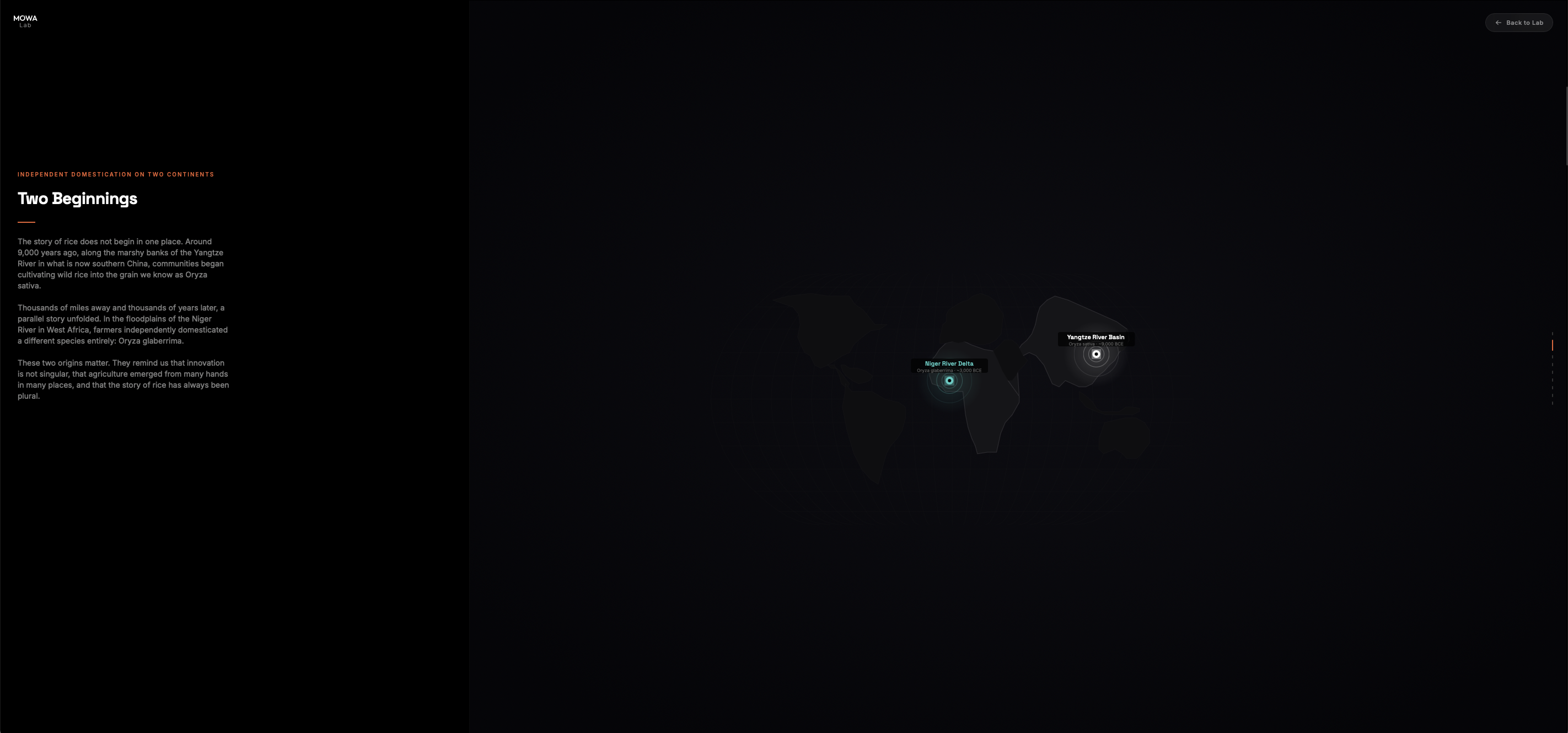
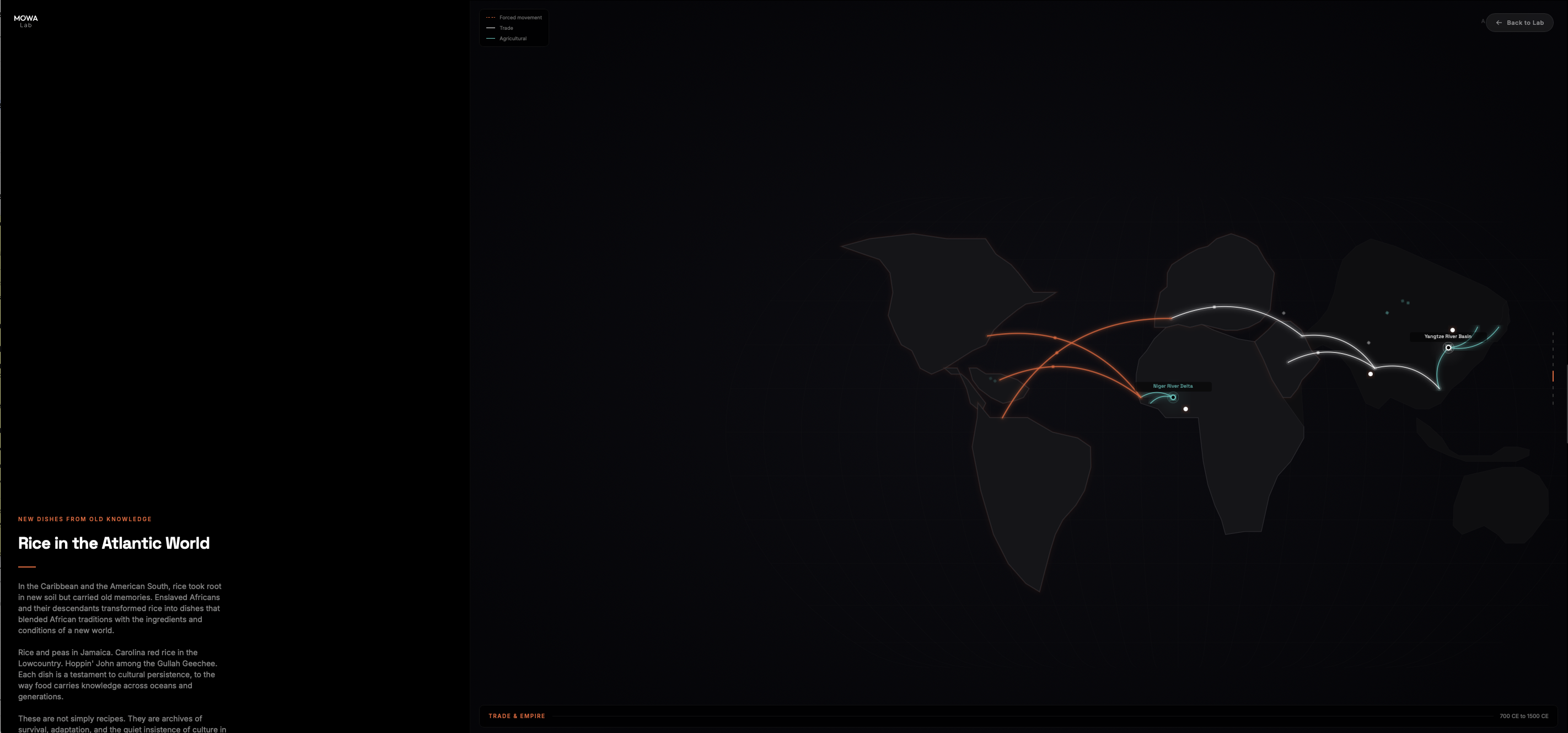
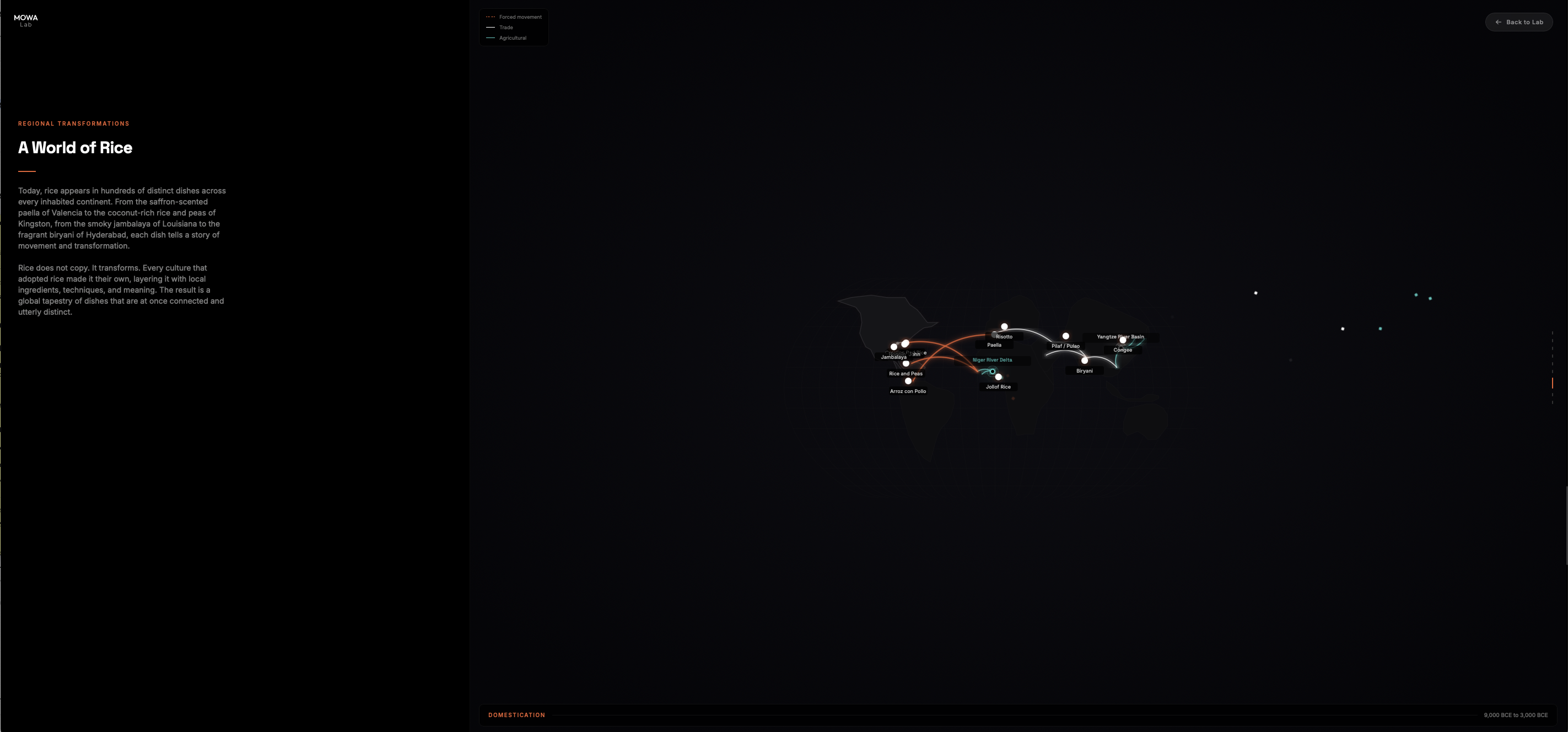
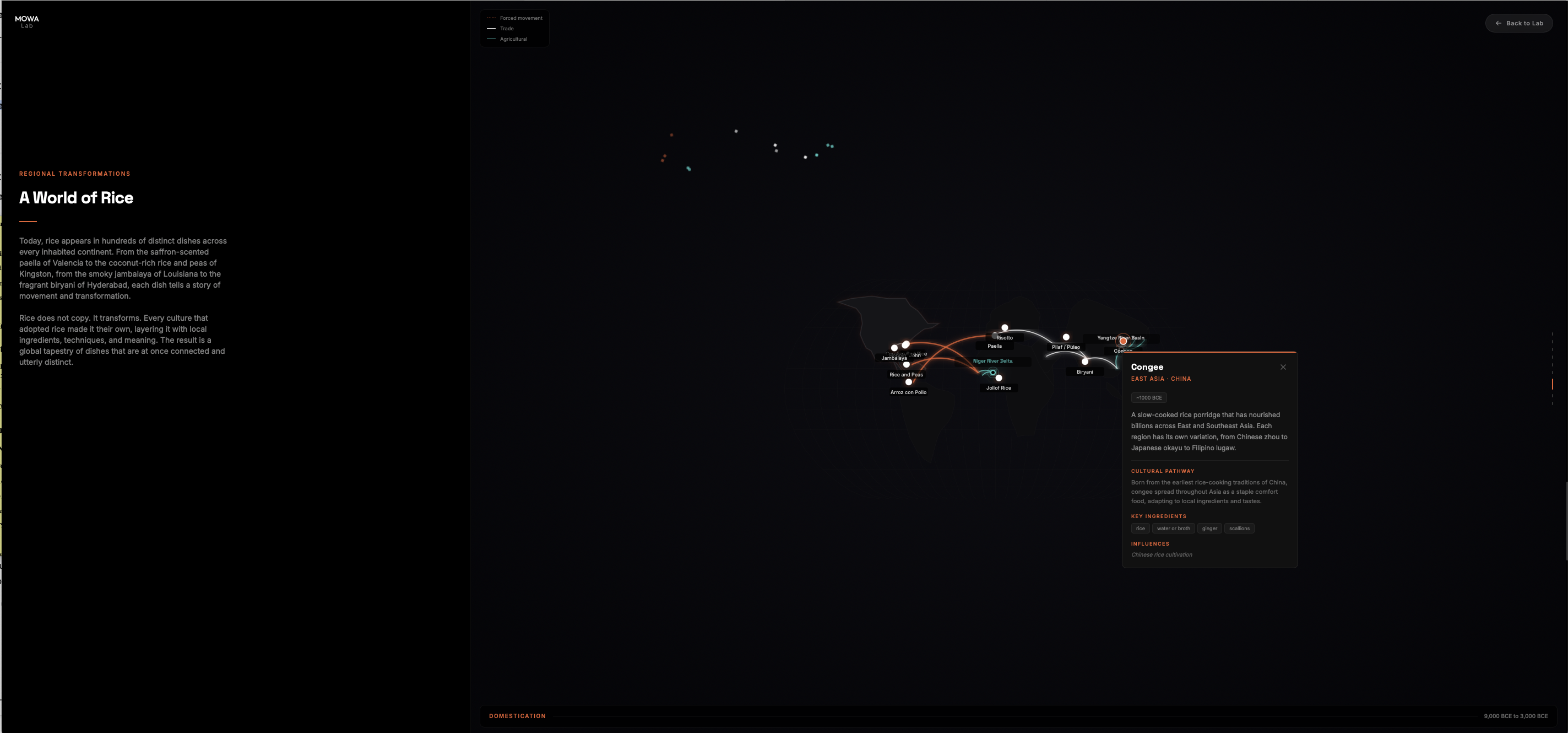
This interactive essay uses scrollytelling techniques to guide readers through the origins, spread, and cultural significance of rice across continents, from its dual domestication in Asia and Africa to its role in shaping cuisines, rituals, and economies worldwide.
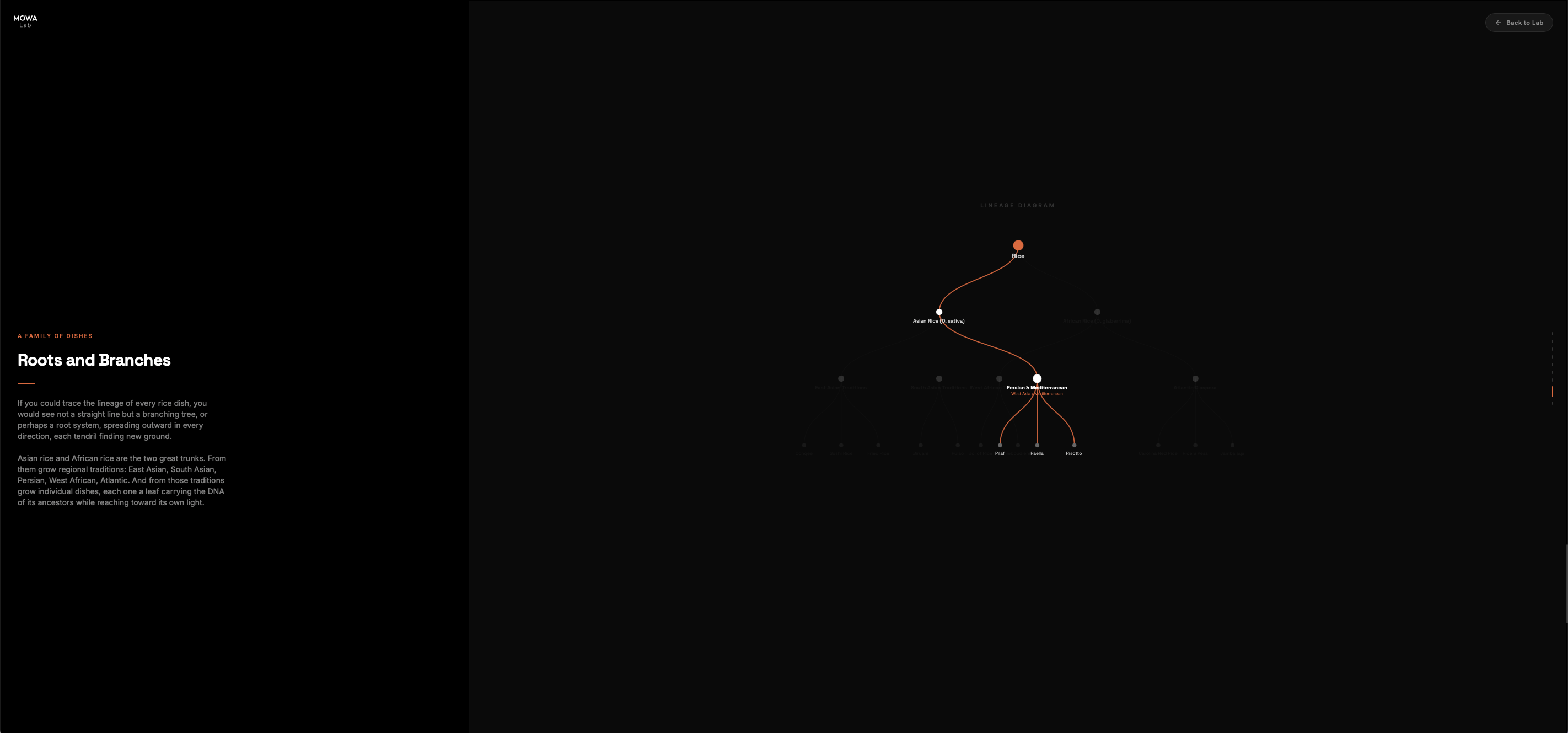
The project combines narrative text panels with sticky visual elements (maps, data charts, and photographic imagery) to create an immersive reading experience that adapts to both desktop and mobile viewports.
How it was built
The essay was developed as a scroll-driven interactive experience that combines narrative storytelling with dynamic data visualisation. The frontend application was built in React and TypeScript, with Tailwind CSS for layout, Framer Motion for animation and scroll-driven transitions, and Leaflet with OpenStreetMap tiles for the global migration map. Custom data structures model rice origins, migration routes, and regional dishes so each animation resolves into something concrete and recognisable.
Scope
- Designed the product concept and narrative structure.
- Researched rice origins, migration routes, and global cuisine traditions.
- Created the dataset linking rice varieties, migration patterns, and regional dishes.
- Designed the interaction model for the scroll-based storytelling experience.
- Implemented the interactive visualisations and animations.
- Defined the visual system and information architecture.
Results
- An interactive project demonstrating how product design can communicate complex cultural systems.
- A reusable framework for future interactive storytelling and data visualisation projects.
Next project
The Language of Gestures →